Becoming a Chartered IT Professional (CITP) — A Professional Milestone
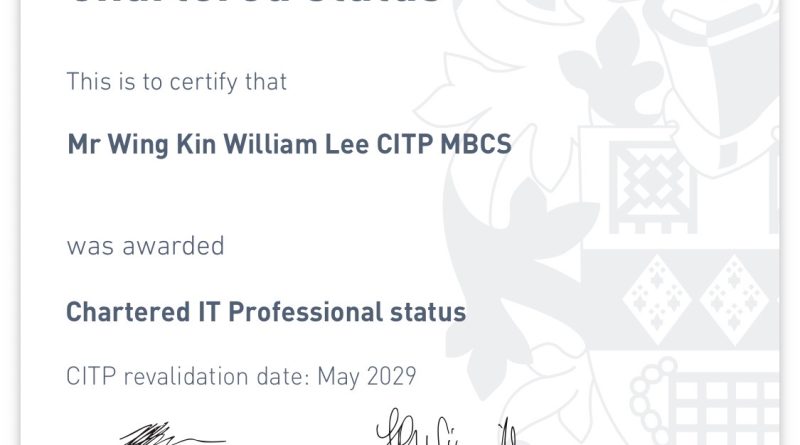
On 1 June 2026, I received formal confirmation from BCS, The Chartered Institute for IT, that I had been awarded Chartered IT Professional status.
Seeing “CITP MBCS” formally placed after my name brought a sense of substance more than excitement. This was not simply another qualification to add to my CV. It represented a structured professional recognition of the experience I have built across information technology, cyber security, architecture, risk and governance.
More than a certificate
Professional qualifications are often understood as evidence of knowledge or examination performance. Chartered Status means something broader to me. It is not only about how much a person knows, but whether they can exercise sound professional judgement in complex and incomplete real-world situations, remain accountable for their advice and decisions, and continue to uphold professional standards.
Information technology is never merely a collection of systems, tools or frameworks. Every technical decision carries implications for cost, risk, users, operational constraints and long-term sustainability. Professionalism is therefore not about producing the most technically elegant answer in isolation. It is about understanding the wider context and proposing an approach that can be explained, implemented and defended.
From solving technical problems to exercising professional judgement
Looking back over my career, my earlier focus was largely on solving technical problems well: identifying causes, controlling risks, correcting systems and keeping services operating. As my responsibilities increased, the questions I faced became less likely to have one objectively correct answer.
Architecture and security work frequently require choices between competing constraints. Which risks are acceptable? Which controls justify investment? How should security, usability, cost and delivery speed be balanced? These questions cannot be answered by a single technology or certificate. They require experience, evidence, communication and professional judgement.
For me, CITP recognises this progression: from being a practitioner capable of delivering technical work to becoming a professional expected to understand the business context, integrate different perspectives and remain accountable for the recommendations made.
Chartered Status also creates an obligation
Achieving Chartered Status does not mean that learning is complete. It requires me to maintain professional competence, remain attentive to changes in technology and the wider profession, regularly reassess my knowledge and judgement, and be willing to challenge existing assumptions when new technologies, risks and ethical questions emerge.
My certificate records a CITP revalidation date of May 2029. That date is a useful reminder that professional status is not a one-off award. It is a commitment that must continue to be demonstrated and maintained.
A milestone, not a destination
I value this recognition because it records an important stage in my professional journey. At the same time, I am clear that CITP is not an endpoint, and it does not automatically make any judgement correct.
My next step is to continue developing my capabilities in enterprise architecture, security architecture, data security, AI governance and professional leadership, and to turn that development into work that is more mature, more implementable and more valuable to the organisations I serve.
On 1 June 2026, I formally became a Chartered IT Professional. It is an achievement worth recording, but also a reminder that professionalism is not merely a title. It is reflected in how we work, how we make decisions and how we remain accountable for their consequences.